Everyone says this draft class sucks. As far as the high-end slam dunk talent, yes. Variety of talent at different positions? indubitably. But does the WR class suck? I don't think so. The model only sees one elite prospect, but there are many players who are good-to-decent fantasy prospects.
This model only uses on-field performance and nothing else. There’s no market share or dominator ratings. No breakout age or other biographical information. No combine data. The passage of time carries no weight here altogether. Draft position is completely ignored. And not a single second of film has been watched of any player. My model focuses on players who will have multiple years as top-performing receivers, rather than the usual "first 3 years top 24 PPG". Although a player with 1 great season and 2 bad ones is a hit there, that's a one-year window that you won't realize you have. I'd prefer to draft someone who leaves a bigger window for winning. Full disclosure: that does leave meat on the bone for players who can help win a championship but won't have careers worth holding them for.
This year's model is drastically improved over last year's.
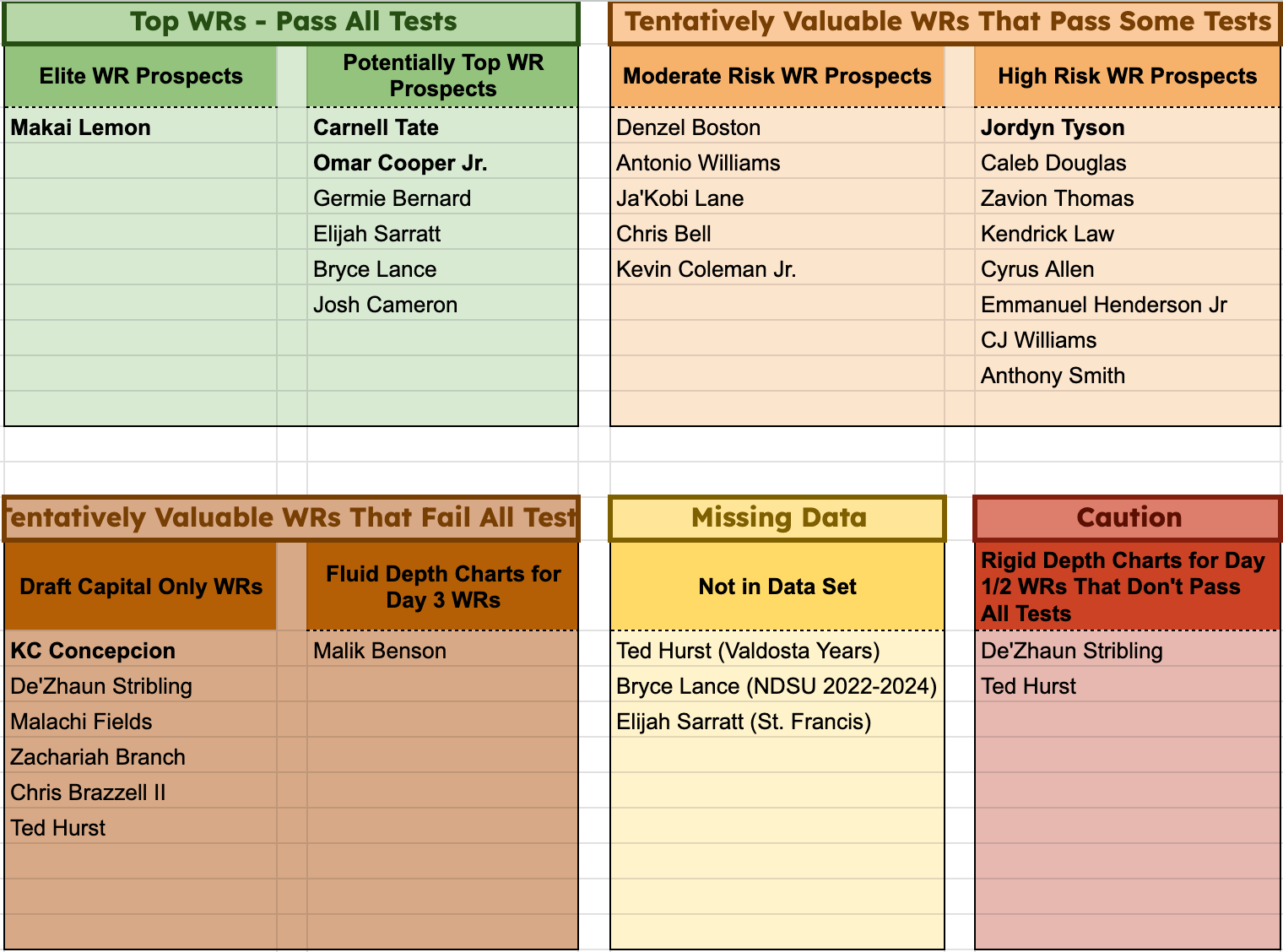
The players are listed in order by draft position, instead of being ranked. It’s self-explanatory which bucket is the best one. I'm going to go section by section, defining each section and then giving some details on each player.
Elite WR Prospects
Players who show zero flaws in their profile. They should have a career of mostly 1000-yard seasons or better.
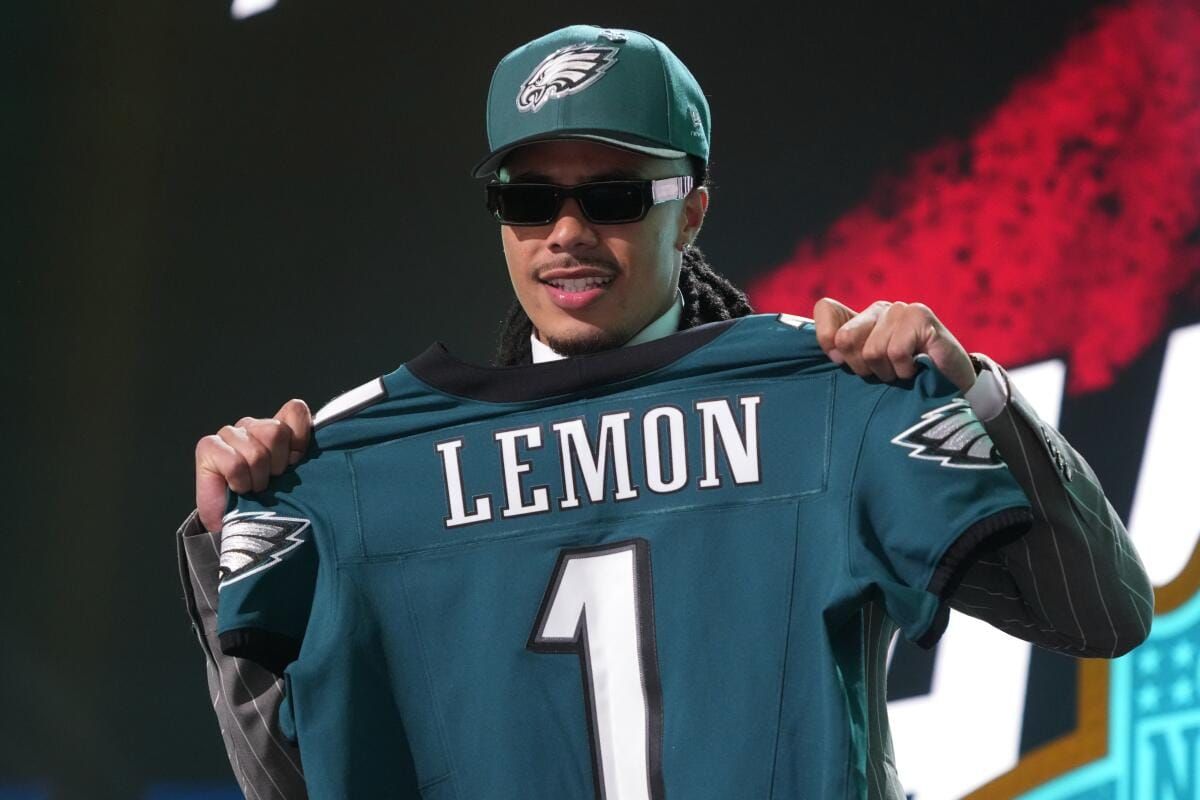
Makai Lemon : Philadelphia Eagles : 20th Overall
Lemon is efficient at every depth past the line of scrimmage, even if he didn't get a lot of targets in the 10-19 yard area at USC. Luckily, the Eagles and Jalen Hurts have overlooked throwing to that area in recent years anyway. That could make this a smooth transition. If A.J. Brown isn't traded, Lemon will be a year away from a true breakout, but he'd still be locked into a big role absorbing short passes from the slot.
Potentially Top WR Prospects
Strong but flawed receiver prospects, they could land anywhere between elite and moderately useful, with busts mostly coming from players drafted late. Some late-round picks in this group have still gone on to have elite or FLEX-level careers.
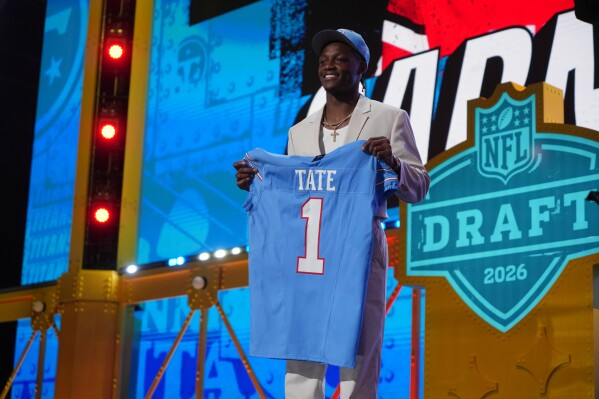
Carnell Tate : Tennessee Titans : 4th Overall
A 5-star recruit coming from a wide receiver assembly line, Carnell Tate's profile includes a ridiculous first-down-per-target rate of over 50%. He's a balanced receiver who didn't show much YAC skills but still put up above-average yards-per-target numbers across every depth, including 80th percentile in the intermediate and 96th percentile going deep. A successful Tate would not have a problem overcoming the target competition of Wan'Dale Robinson and nearly 32-year-old Calvin Ridley.
Omar Cooper Jr : New York Jets : 30th Overall
Indiana won the Superstar crown in the College Football Mario Party, and Omar Cooper Jr. is one of the big beneficiaries of that. Across Cooper's 52 career intermediate targets, he's 95th percentile in yards-per-target, 92nd percentile in yards-per-reception, and 94th percentile in YAC-per-reception amongst all drafted receivers from 2017-2026. Garrett Wilson is a real competition for those intermediate chances, but there's a chance Cooper takes a huge chunk of the short targets, especially screens.
Germie Bernard : Pittsburgh Steelers : 47th Overall
Through four seasons at three different schools, Bernard played outside and slot while also getting as many catches under 10 air yards as he did past 10 air yards. He's a versatile player with YAC skills. Despite the Steelers having two outside receivers, Bernard is an easy fit into the slot and might still play on the outside if the Steelers decide to get creative.
Elijah Sarratt : Baltimore Ravens : 115th Overall + Missing Data
The first player so far missing some of their data. Sarratt's year at St. Francis has incomplete data, so he's being graded on everything except that. Which is...hey, it's alright! He somehow collected 260 combined short and intermediate targets over his career, which feels like a high number to me. More impressively, he is still over the 70th percentile in yards-per-target at both of those depths. Sarratt is on the edge of being in the Elite WR Prospects bucket, but with the missing data, I have to penalize him (it's safer to assume that data might make him look worse). Nonetheless, with how weak this draft class is and the price you can get him at, I might be willing to overlook that personally.
Bryce Lance : New Orleans Saints : 136th Overall + Missing Data
Our second player missing data. Lance's NDSU seasons prior to his final 2025 season have some incomplete values. Ignoring those, what is left is an efficient and very fast receiver. The majority of Bryce's work at NDSU came on the deep ball, where his career 26 yards per target are 99th percentile for all drafted receivers from 2017-2026. But is it surprising that a 6'3 204 lb player running a 4.34 would breeze by the defenders of Illinois State and St. Thomas? Lance is eerily similar to former NDSU receiver Christian Watson, from their size to their specialization even if speculators aren't assessing them as such. Watson was a slightly better receiver beyond the deep ball, but isn't taking a shot at Christian Watson late in the draft not that bad? Add the sudden retirement risk Chris Olave poses, along with the injury risk rookie teammate Jordyn Tyson is entering the NFL already carrying, and the only player he has to beat in camp to get on the field is Devaughn Vale- maybe he's a good lottery pick after all?
Josh Cameron : Jacksonville Jaguars : 191st Overall
Cameron spent every season at Baylor playing on the outside, producing moderate volume numbers. But the efficiency he had looks good! It’s even similar to players who have been successful in the NFL. However, late-round picks are always going to struggle to see the field, and it’s even harder when they’re stuck behind the trio of Brian Thomas Jr., Jakobi Meyers, and Parker Washington- before considering whether Travis Hunter could move back to wide receiver. Not to mention, Baylor’s receivers have all been doing their best Elizabeth Holmes impressions by regularly revealing themselves as frauds to their investors. At least this one is cheap to acquire. Too bad he also may be as far from seeing the field as I am.
Moderate Risk Potential Top WRs
They're missing an important mark in their profile, but there have been receivers regularly hitting top 24 end-of-year stats in here. However, there are more busts in this group than either of the last two, and you're more likely to get a FLEX-level starter than a top 24 player here.
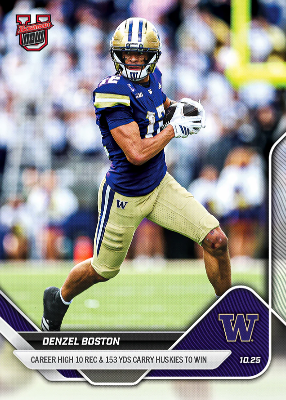
Denzel Boston : Cleveland Browns : 39th Overall
With a nearly 50% first-down-per-target career rate, it's surprising that Boston is otherwise unspectacular, with the majority of his above-average efficiency coming on short passes and screens in college despite being a hulking outside receiver. That puts him in conflict with KC Concepcion, who was drafted higher and did the same, but from the slot. Both Cleveland Rookie Quarterbacks threw a majority of their passes near the line of scrimmage, so it's not clear to me if that's the direction the Browns will continue to go this year. For what it's worth, Jerry Jeudy (the only likely carryover starter at receiver) has been below average over his career on short targets, so there's a good reason for the team to try and find someone that can thrive on them.
Antonio Williams : Washington Commanders : 71st Overall
There's not a lot standing in the way of Williams being a week 1 starter for the Commanders, who let both of their top slot receivers walk in free agency (Zach Ertz and Deebo Samuel). The Commanders are the rumored destination for Brandon Aiyuk, which shouldn't impact Antonio Williams, considering Aiyuk has never played more than 20% of snaps in the slot. And Terry McLaurin has spent less than 15% of his snaps in the slot over the last three seasons as well. Add to it that McLaurin is coming off an injured season and entering age 31, and there is no meaningful tight end to project short targets over the rookie, and suddenly there's a lot of space for Williams. I feel safe assuming he's a week 1 starter, and I think his chances to be a winner in this bucket are high.
Ja'Kobi Lane : Baltimore Ravens : 80th Overall
USC's second contribution to this year's wide receivers. Lane wasn't as good as Lemon, but he was still an efficient receiver propelled by his ability to get open in the short and intermediate depths. He doesn’t show the same dynamic skills that Lemon did, and he won't be competing with him anymore on the Ravens. However, Zay Flowers is a strong NFL talent with more dynamic range than what Lane put together at USC. Still, there isn't a lot of reason Rashod Bateman or Devontez Walker can keep Lane from seeing the field. In my eyes, it's a battle between Lane and Sarratt for who gets to catch passes as the second and third option for the often low-volume Ravens offense. Maybe a new coach and receivers can change that?
Chris Bell : Miami Dolphins : 94th Overall
One of two receivers named Bell drafted, Chris landed on a team whose receiver depth chart wasn’t even written down on an internal Dolphins whiteboard, probably to save the ink. Chris Bell had a 90th percentile short game in college, along with an average intermediate game. This puts him in a good place to soak up PPR production for a team only carrying over Malik Washington from last year's starting lineup.
Kevin Coleman Jr : Miami Dolphins : 177th Overall
More on the easiest depth chart to climb in this year's draft, Coleman has the same strengths as Chris Bell, but with a 90% college slot rate, while also showing a stronger YAC game on his 53 targets behind the line of scrimmage. Malik Washington led the team in slot snaps last year, but barely made a dent over the course of the season, even though he was efficient with his targets. The Dolphins could start all three of their rookies by the end of the year, making Coleman a worthy dart throw at the end of drafts.
High Risk Potential Top WR
These receivers are efficient at getting yards, but fail other efficiency metrics. Nonetheless, there are a few players in this bucket that have multiple 1000 yard seasons in their careers but there's also even more busts. A vast majority of these players will fail.
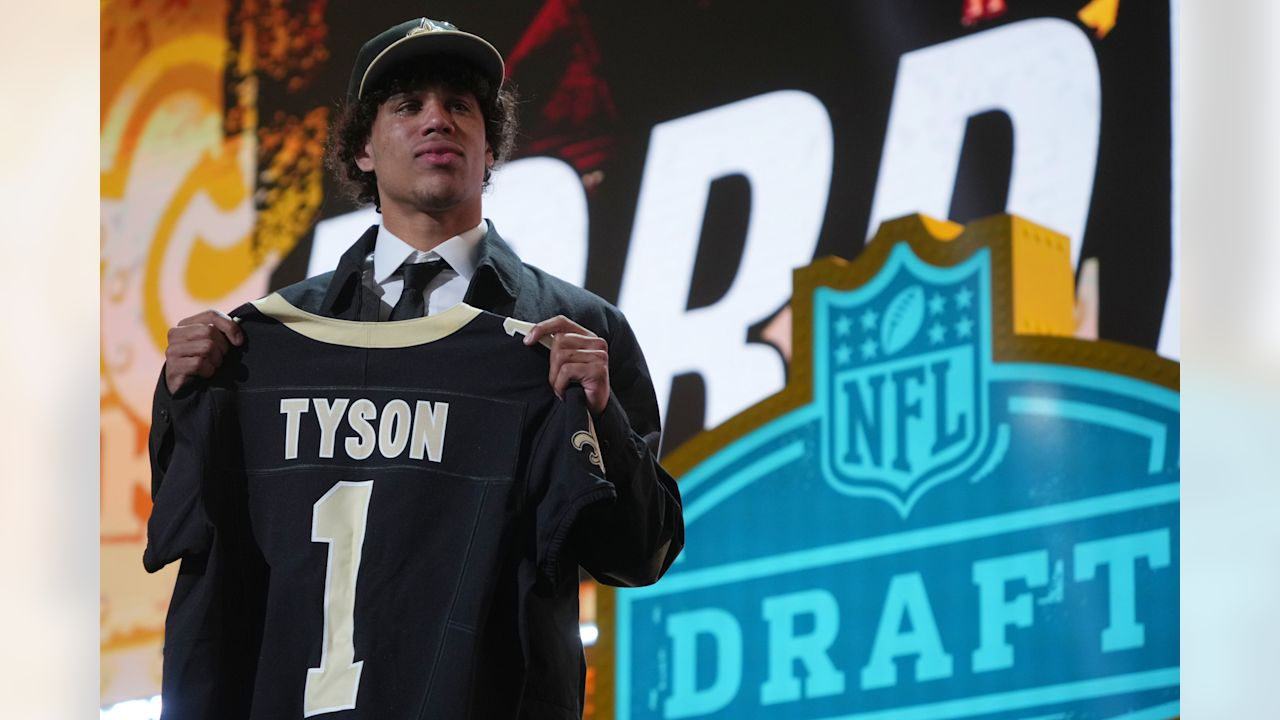
Jordyn Tyson : New Orleans Saints : 8th Overall
Tyson has two problems: his career college efficiency is slightly below average and he has often been injured. While only the first point contributes any data to my model, the other one contributes to my uncertainty about him and gives me a built-in excuse if he succeeds despite the data ("Well obviously, he was playing worse because he was recovering!"). Still, players in this bucket have become elite NFL contributors despite flawed profiles (Rashee Rice), so I could talk myself into him as this year's 1.04 (I say, trying to convince leaguemates to trade for my pick so I don’t have to be the one to take the gamble).
Caleb Douglas : Miami Dolphins : 75th Overall
Returning to the Dolphins for the third and final time, Douglas was the first receiver the Dolphins picked and is also the most well-rounded. Unfortunately, that is paired with him not showing any particular prowess in college. He was average or below at every depth of the field, and his career targets across short, intermediate, and deep depths were all nearly equal. But he’s a versatile player on the outside who will have the inside track to be a week 1 starter out of all the Dolphins' rookies. To sum up all three Dolphins receivers, I would draft any of them as long as the price is right.
Zavion Thomas : Chicago Bears : 89th Overall
The Bears' third receiver is currently penciled in as a starter, but the Bears might end up using two Tight Ends enough to make that role feel like it's closer to WR4. The Bears used three receivers on 52.6% of their snaps last year (10th lowest in the league), and that was with DJ Moore and half a season of ignoring Colston Loveland. Thomas's college strengths were mostly in the short game, and both of Luther Burden and Rome Odunze have shown that skill in the NFL, so what makes him a must-have on the field? The upside I foresee him having is as an arbitrage in case Luther Burden's speed-of-sound efficiency crashes and leaves a meteor-sized crater of an opening (I really don't know what to make of him). Or Rome Odunze continues to do less.
Kendrick Law : Detroit Lions : 168th Overall
Law spent most of his college career in the slot at both Kentucky and Alabama, and was mostly used as a receiver behind the line of scrimmage. Regardless, the YAC he showed on those was pretty good, and in general, his YAC skills at all depths are above average. But the Lions don't exactly need another short-YAC-based slot receiver, so unless he develops a bag on the outside, he's stuck as Amon-Ra insurance.
Cyrus Allen : Kansas City Chiefs : 176th Overall
It’s 2019, and the Chiefs have drafted a short and fast wide receiver to replace Tyreek Hill. It’s 2022, and the Chiefs have drafted a short and fast wide receiver to replace Tyreek Hill. It’s 2024, and the Chiefs have drafted a short and fast wide receiver to replace Tyreek Hill. It’s 2026, and the Chiefs take yet another short and deep-oriented wide receiver, still trying to fill the Tyreek Hill shaped void in their hearts. Allen had 68 deep targets over his college career and was slightly better than average on them. But not so much anywhere else. Xavier Worthy and Tyquan Thornton have ostensibly the same deep role for the Chiefs, but that's because they don't have anyone doing it better for them. Allen could overtake Thornton at the second outside receiver spot if he has any real talent, but Worthy is also very close to being relegated to WR3 status if Allen proves to be more efficient. I like Allen as a late dart throw because right now Rashee Rice is the only receiver the Chiefs have to start all year if healthy, and he has missed a lot of games for a lot of reasons. And even if he does play all year, he’s not the person blocking Allen from seeing the field.
Emmanuel Henderson : Seattle Seahawks : 199th Overall
Another fast receiver, different team this time. Henderson's tall and lanky with speed and returner skills. He didn't get much use across four years of college, but what little he did as a senior does show up as efficient, specifically in the intermediate and deep depths. That makes him similar to Rashid Shaheed (in theory), who he might end up being the direct backup for by season’s end. Although he’s efficient, his path to relevance is not clear whatsoever, but working as a returner would help the Seahawks discover any talent he’s hiding to carve out a role for himself (in theory).
CJ Williams : Jacksonville Jaguars : 203rd Overall
Williams was mostly inefficient as a player, but still efficient for the context of his college team. However, with no return skills and at least 4-5 players ahead of him (I'm assuming rookie teammate Josh Cameron will be ahead of him, too), I don't think there's a reason to look this way personally. But the data implies he's a name worth at least keeping in the back of your head somewhere between the 10th best joke you half remember from 30 Rock and what that thing on your desk you refuse to throw out is originally from.
Anthony Smith : Dallas Cowboys : 218th Overall
Sixth-year senior Anthony Smith was an above-average intermediate receiver during his college career, but it doesn't leave me impressed to know he was doing that damage at an age most drafted receivers are already in the NFL. The path to relevance goes through Ceedee Lamb and George Pickens, the latter being only one year older despite four accrued NFL seasons, and then backup outside receiver Marquez Valdes-Scantling. It's not impossible that he could steal the WR4 spot from Scantling, or maybe outperform Ryan Flournoy, but it doesn't feel likely to me.
Draft Capital Only WRs
None of these players pass the efficiency marks for regular 1000-yard receivers. However, they have the draft investment to possibly overcome that through opportunity, and maybe they'll even grow into the job. There is only one regular 1000-yard receiver in this group's history, but there are a few FLEX-caliber starters.
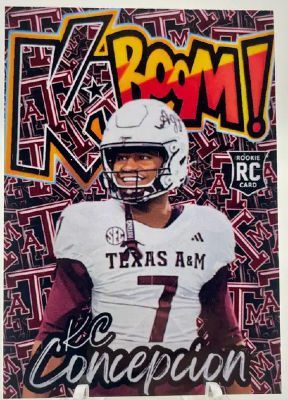
KC Concepcion : Cleveland Browns : 24th Overall
A versatile receiver with both Slot and Outside experience in college, Concepcion is joining the liminal space known as “The Cleveland Browns Wide Receiver Room.” It helps Concepcion's case that his highest usage came from passes under 10 yards, which the Browns Quarterbacks were near the top of the league at. The quality of those passes will vary, but the opportunity is there.
De'Zhaun Stribling : San Francisco 49ers : 33rd Overall + Rigid Depth Chart
Stribling will be hoping one of Mike Evans or Ricky Pearsall gets injured, because I can't imagine how he would get on the field without that happening. Luckily for him, he has very good odds of that happening. Stribling's five-year college career showed above-average production in everything except the deep area. However, much of that came during his 4th and 5th college seasons, leading to questions about whether he was college football’s Jimbo Jones. Without passing the other efficiency markers to be in a better bucket, my guess is that explains it. Even at a projected 29th overall ADP despite being the 33rd overall pick, it feels like catching a falling knife.
Malachi Fields : New York Giants : 74th Overall
While the Giants likely selected him as some insurance for Malik Nabers, you will not mistake Malachi Fields for Nabers. Tall and slow, he has average YAC traits while showing some talent for getting something out of short targets. He might be able to see the field over Darius Slayton, despite Slayton's 16-million dollar cap hit and equivalent dead cap, especially with a new coach in town that could value Fields' size for blocking.
Zachariah Branch : Atlanta Falcons : 79th Overall
Despite the 4.35 40-time, Branch was mostly inefficient as a deep receiver at a 6th percentile yards-per-target. He made most of his best plays on short catches. While Branch could be the target leader for screens on this offense and the snap leader in the slot, the prospect profile doesn't look like a player who can challenge Drake London for targets. But having skill as a returner could get him onto the field sooner, especially with Olamide Zaccheaus as his only obstacle.
Chris Brazzell II : Carolina Panthers : 83rd Overall
Xavier Legette has been one of the worst starters in the league over his career, so Brazzell should be the chalk day 1 starter, barring injury or Legette finding an IRL Missingno hack. But Brazzell doesn't show a lot of effectiveness beyond the deep ball and is sharing the field with Offensive Rookie-of-the-Year Tetairoa McMillan on an offense easy to project in the bottom half of the league. Well, maybe not having Legette on the field could improve that.
Ted Hurst : Tampa Bay Buccaneers : 84th Overall + Missing Data + Rigid Depth Chart
Hurst's years at Valdosta State are missing from my data. He's also landed on a team with Emeka Egbuka and Chris Godwin as the sure-fire starters and will be competing with Jalen McMillan and Tez Johnson for the final spot on the outside when Godwin or Egbuka go into the slot. That's going to be a tough climb for a player who showed so little efficiency in college. I think it would take some spectacular play to see the field, even as a 3rd rounder.
Fluid Depth Charts for Day 3 WRs
The players here don't pass any tests, but landed on teams that haven't figured out their starting lineups or have players at risk of losing their starter status. The receivers in this group make a good end-of-draft pick just because they might return early value even if it doesn't result in a real long-term producer. This is out of the scope of the model; they’re just my observations.
Malik Benson : Las Vegas Raiders : 195th Overall
The Raiders' receiver room is desperate for someone to step up. Jalen Nailor figures to be the only sure-fire season-long starter with the Raiders, who handed him a $12 million-per-year contract that I imagine Nailor’s agent was having him sign before it was even done printing. Not to say anything negative about Nailor, who I do like as a player, but that speaks to a desperate receiver room. Malik Benson's strongest areas of the field are past 10 yards, a unique skill when compared to the top 3 receivers in the Raiders' room, which gives him a chance to be a surprise early-season starter.
Random Players That Might Hold Value
This is also out of the model’s scope, but contains players that i’ll be paying attention to and considering at the right cost.
Skyler Bell : Buffalo Bills : 125th Overall
The second Bell drafted carries a similar usage profile to the first. He's at his best in the short/intermediate game, which is great for a team like the Bills that has desperately needed another outside receiver who can work in the intermediate depth. It's a great situation to be in, and the only competition is the duo of Joshua Palmer and Keon Coleman, who are both better off as the sixth man.


Member discussion: