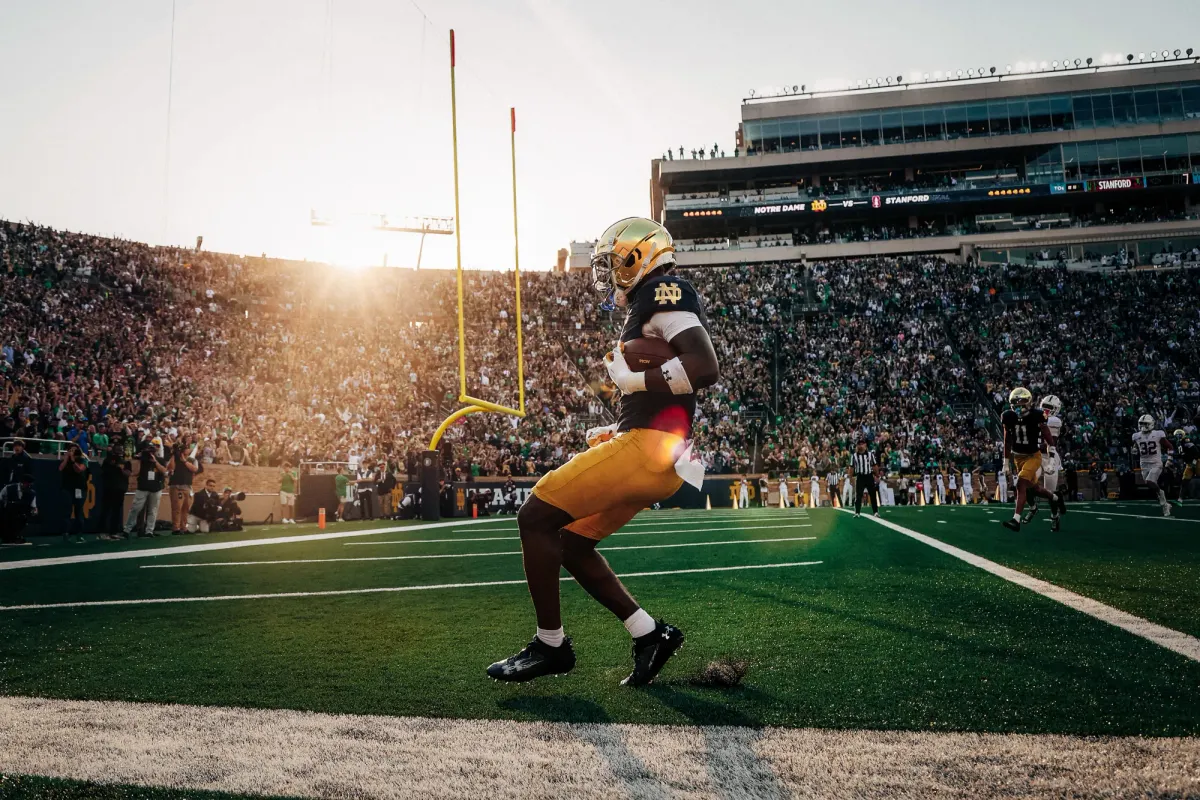
Twelve running backs. That's all that was drafted this year. Fewest drafted in at least 30 years, and probably much longer, but I couldn't bear to keep scrolling and counting. The next fewest was the 2020 draft class with 16. That class contained Jonathan Taylor, JK Dobbins, Cam Akers, and D'Andre Swift, so it did not feel like this. If you were hoping to draft a rookie running back this year, I'm sorry. There isn't a lot of upside to be found by my model, which I also need to explain.
The data for running backs is incomplete, not due to missing data, but from a lack of tracking statistics that would almost certainly improve the results. As such, this is the least trustworthy of the three models. Although I do trust its ability to identify the "good in space" running back type (sometimes). It's much harder to identify the backs that thrive at the line of scrimmage, reading blocks, and making good decisions. So these results should be taken with more scrutiny than you would normally give a model that does not tell you its components. Even when it identifies players that are talented in space, it struggles to note if those players are weak at the line of scrimmage (Rachaad White, for example). And it has missed players whose main value occurs at the line of scrimmage with the ball in their hands. But I'm committed to posting it. In past years, it identified Bucky Irving and Cam Skattebo, but the same version couldn’t recognize Omarion Hampton or Quinshon Judkins as potentially good backs because they did not operate well in space, nor does that seem to be the point of their game.
This year's model improved on last year's but still has gaps in understanding the running back position. Hopefully, it is still useful.
Also, check out the 2026 WR Model Results and the TE Model Results.
This model only uses on-field performance and nothing else. There’s no market share or dominator ratings. No breakout age or other biographical information. No combine data. The passage of time carries no weight here whatsoever. The draft position is completely ignored. And not a single second of film has been watched of any player. My model focuses on players who will have multiple years as top-performers, rather than the usual "first 3 years top 24 PPG". Although a player with 1 great season and 2 bad ones is a good pick, that's a one-year window that you won't realize you have. I'd prefer to draft someone who leaves a bigger window for winning. Full disclosure: that does leave meat on the bone for players who can help win a championship but won't have careers worth holding them for.
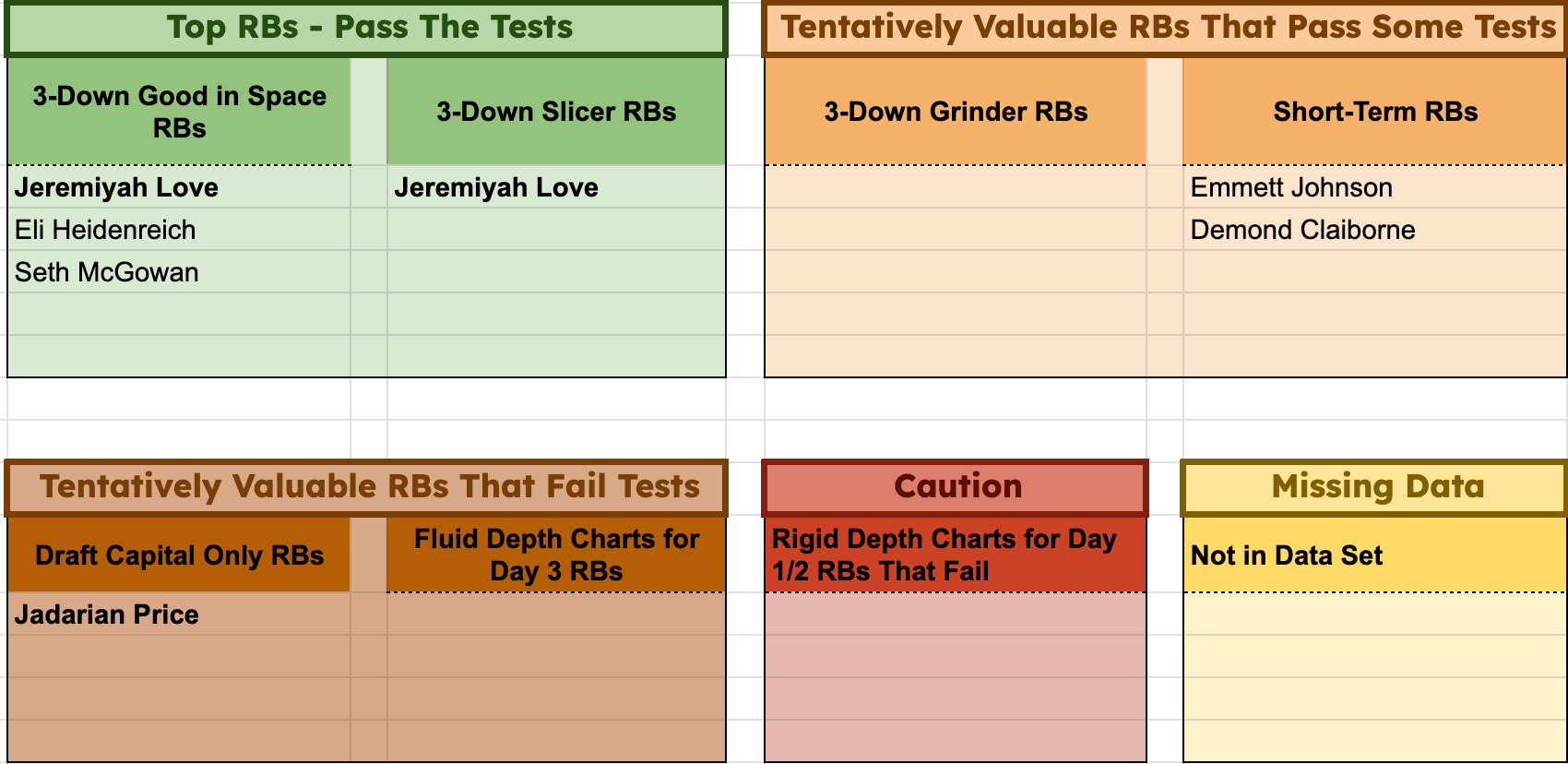
The players are listed in order by draft position, instead of being ranked. It’s mostly self-explanatory which bucket is the best. I'm going to go section by section, defining each and giving some details on each player.
Because running backs have multiple roles, a player can be in both the 3-Down Pass Catching and 3-Down Slicer buckets. Being in both is an elite 3-Down RB prospect.
3-Down Elite RB Prospects
Players who meet the criteria for being elite in space and slicing around the line of scrimmage. This bucket is a rare group and has the highest hit rates for RB1s. Jonathan Taylor, Kyren Williams, and Rachaad White are the kind of players who would fall into this category. Busts exist here, but these are the best chances to take.
Jeremiyah Love : Arizona Cardinals : 3rd Overall
Love has a 95th percentile career "avoided tackle" rate, with one avoided tackle for every three touches. His YAC per reception was 10.5, 65th percentile for all prospects from 2017-2026. Both of his yards before and after contact values as a rusher are above average, with the latter being 96th percentile. Those are just some of the efficiency stats he dominates. Love would likely be a first-round pick in any draft and feels like he's being underrated despite no one thinking lowly of him. The Cardinals are a great landing spot, with an offense that will keep the box honest through multiple receiving options and an offensive line that produced a 60th percentile yards before contact in 2025 (for all teams from 2018-2025). And that’s with five very different running backs carrying the ball. If you're lucky enough to fall in(to) Love (in your rookie draft), hold onto it (him).
Space-Beating RBs
Players in this group show NFL quality pass-catching ability and dominance in space. Successful players like James Cook, Bucky Irving, and Javonte Williams are all in this category. This bucket contains RB1s and some RB2s, along with many busts.
Eli Heidenreich : Pittsburgh Steelers : 230th Overall
We're going head-first into the deep end. I get that Navy has a reputation as unserious football but the data says what it says. Heidenreich was good in space at Navy. He played every position: Slot, Wide Receiver, Tight End, Running Back; and was even listed by PFF as a Fullback. However, the Steelers drafted him as a running back. Some media have mused about him becoming a fullback but that sounds unlikely considering he's 5'11 and 197 lbs. It's easier to imagine him continuing at receiver. Not to mention, they drafted Riley Nowakowski who is much closer to a fullback. But again, the Steelers are currently listing Heidenreich as a running back. And if you take the numbers as they are, they look good. He had good YAC in college, obviously helped by his time as a wide receiver, and avoided tackles at a high rate on his total touches (67th percentile). It's not a surprise that a model looking for "good receivers at running back" would find a wide receiver who may play running back in the NFL to be good at it. The model also thought highly of players like Antonio Gibson, who made the same conversion and had a useful, but not special, career. Plus, Mike McCarthy already had a wide receiver he converted to running back before named Ty Montgomery. So this isn't uncharted territory for him.
Seth McGowan : Indianapolis Colts : 237th Overall
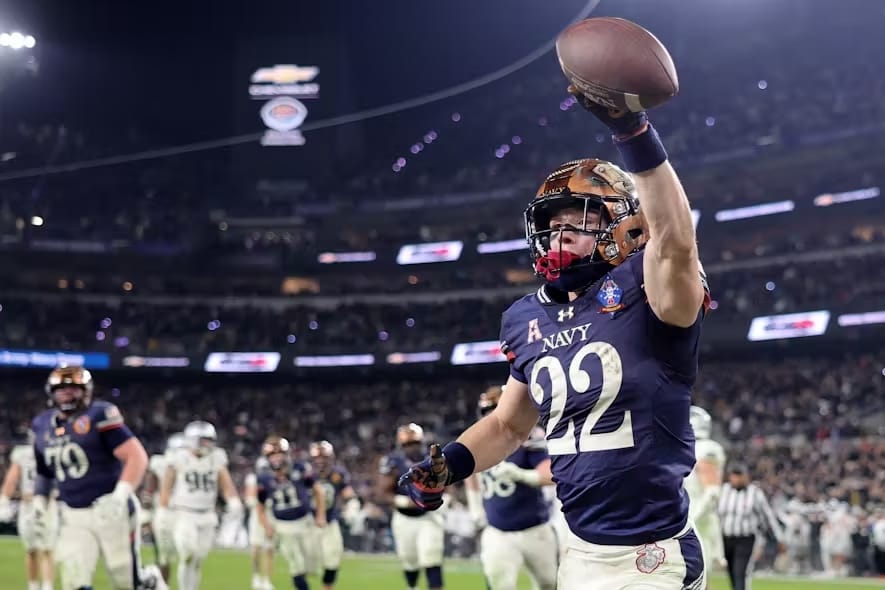
The model ignores age, but I still take a peek at it. A small glance. A quick dart. And rookie Seth McGowan is only a single year younger than Jonathan Taylor, entering his seventh NFL season. It doesn't change that McGowan showed fluidity in the open field with a 62nd percentile avoided-tackle-per-touch rate and 70th percentile YAC-per-reception. But like glass, McGowan's profile shatters on the ground. McGowan was below average before contact and after, with an extremely low rate of 15+ yard runs at the 16th percentile. The spot behind Taylor is loosely held and impact-less, but it’s still available to be won. I'm not sold on McGowan's upside as an elder who only beat up younger players in space and didn't show that in many other places. Maybe if he's free, and an off-season drumbeat appears. But the Model says he should be considered, so you can consider him.
Ground Slicers and Slasher RBs
Players in this group show the right qualities for being dominant on their carries, with a propensity for making tacklers miss in tight spaces. Successful players in this category include Breece Hall, Kenneth Walker, and David Montgomery. This bucket contains some RB1s, along with RB2s and a few FLEX RBs as well. And of course, Busts.
There are no players that are solely in this bucket this year.
3-Down Grinder
Players in this group show 3-down qualities without dominant efficiency and are seemingly better suited to a split role, but may still hold full-time dominant roles regardless. Very few successful players are in this category, but some who have been in the past are Tony Pollard, JK Dobbins, and Najee Harris. This group mostly produces RB2 types and busts.
There are surprisingly no players that are in this bucket either.
Short-Term Backs
Players in this group can produce, but don't show enough dynamic range to remain in control of their own destiny. Successful players in this group include Blake Corum, Zach Charbonnet, and Isiah Pacheco. This group mostly produces FLEX starters with short windows of opportunity.
Emmett Johnson : Kansas City Chiefs : 161st Overall
Johnson is unlikely to climb the depth chart, and there isn't a lot of detail in his favor to suggest he should. While he can hold onto an above 60th percentile avoided tackle rate on all touches, all his other values are below average, pointing to that "undynamic grinder" profile that we have all come to love and hate when we're deciding which of our uninspiring FLEX options we want to be disappointed with. At least on the Chiefs, this role has been "okay, i guess" for fantasy.
Demond Claiborne : Minnesota Vikings : 198th Overall
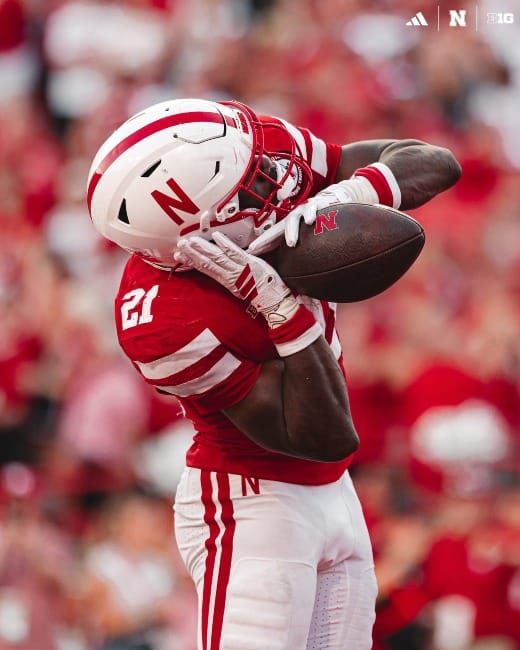
Claiborne's light frame has ways of showing up in his data, as he avoided tackles by rushing at a low 20th percentile level, but as a receiver, he's at the high 70th percentile. But despite that, and his speed, it didn't result in YAC efficiency. That's why he's not in the Space-Beating RBs bucket. If you need to break tackles just to be nearly average, that implies some obvious downsides. The Vikings are nonetheless a good landing spot, since Aaron Jones is declining, and Jordan Mason has yet to show the versatility of a 3-down back.
Draft Capital Only RBs
These players don't have any successful groups they fit into, and are mostly held up by their draft capital. Successful players from this category include Clyde-Edwards Helaire and Alexander Mattison.
Jadarian Price : Seattle Seahawks : 32nd Overall
If Price can make 30 catches per year, he'll easily outplay the previous most successful players in this bucket. Price's avoided tackle rates are all above the 70th percentile, and his breakaway run rate is 90th percentile, along with a 95th percentile 4.3 yards after contact. There's an upside to a perfect version of him that can maximize those skills. However, he was seldom used as a receiver, and his per-route numbers do not inspire as much confidence as his per-catch numbers do. The latter could be pointing to some hidden upside to him, but also maybe teams just forget he's on the field when he’s so rarely used that way. And if that was the case, good for him! The Seahawks can provide that same cover for him anyway.
Fluid Depth Charts for Day 3 RBs
The players here don't pass any tests and have no significant investment, but landed on teams that haven't figured out their starting lineups or have players at risk of losing their starter status. The running backs in this group make good end-of-draft picks just because they might return early value, even if it doesn't result in a real long-term producer. This is out of the scope of the model; they’re just my observations.
None of the Day 3 running backs landed in ripe situations. But Demond Claiborne might be the closest to getting a meaningful role. I think everyone has also correctly assumed Mike Washington will have a goal-line or short-yardage role, but I don't think he has a chance at taking a lot of opportunities away from Ashton Jeanty.
Extra Players I'm Interested In
Outside the scope of the model, just players that stand out to me when looking through the data.
Jonah Coleman : Denver Broncos : 108th Overall
Coleman is close to being in the 3-Down Good in Space RBs category. It feels like a mistake that he's not in there, but I'm going to trust the model insofar as I'm not going to force him where he doesn't belong. That doesn't mean he isn't worth considering. Coleman's avoided tackle rate per touch was at 31.3% (88th percentile), and he produced a respectable 10.7 YAC per catch (67th percentile). He also showed pinball skills with a high rushing yards after contact of 4.1 yards per attempt, 90th percentile. The Broncos will have J.K. Dobbins and R.J. Harvey, but Harvey wasn't a good player on the ground last year by nearly any measure other than breaking tackles, which still did not lead to a great performance. Dobbins is definitely a challenge to overcome, but so far in his career, he has been injury-prone and played a low-volume role in the passing game. Coleman could be the RB2 here, and maybe if he's as good as some of his data suggests, he can be in a 1A/1B split with Dobbins. The biggest downside is that in order to even take this gamble, you'd have to spend a top 15 pick, according to current ADPs. That's hard to stomach.

Member discussion: